What the Best Brands Built at Coachella 2026
The strongest brand activations at Coachella 2026 were not just bigger or louder. They gave guests a reason to stay, engage, and remember.
One of the most interesting brand builds at Coachella 2026 was not the largest.
It was a phone-free room.
No devices.
No documentation.
No performance.
Just presence.
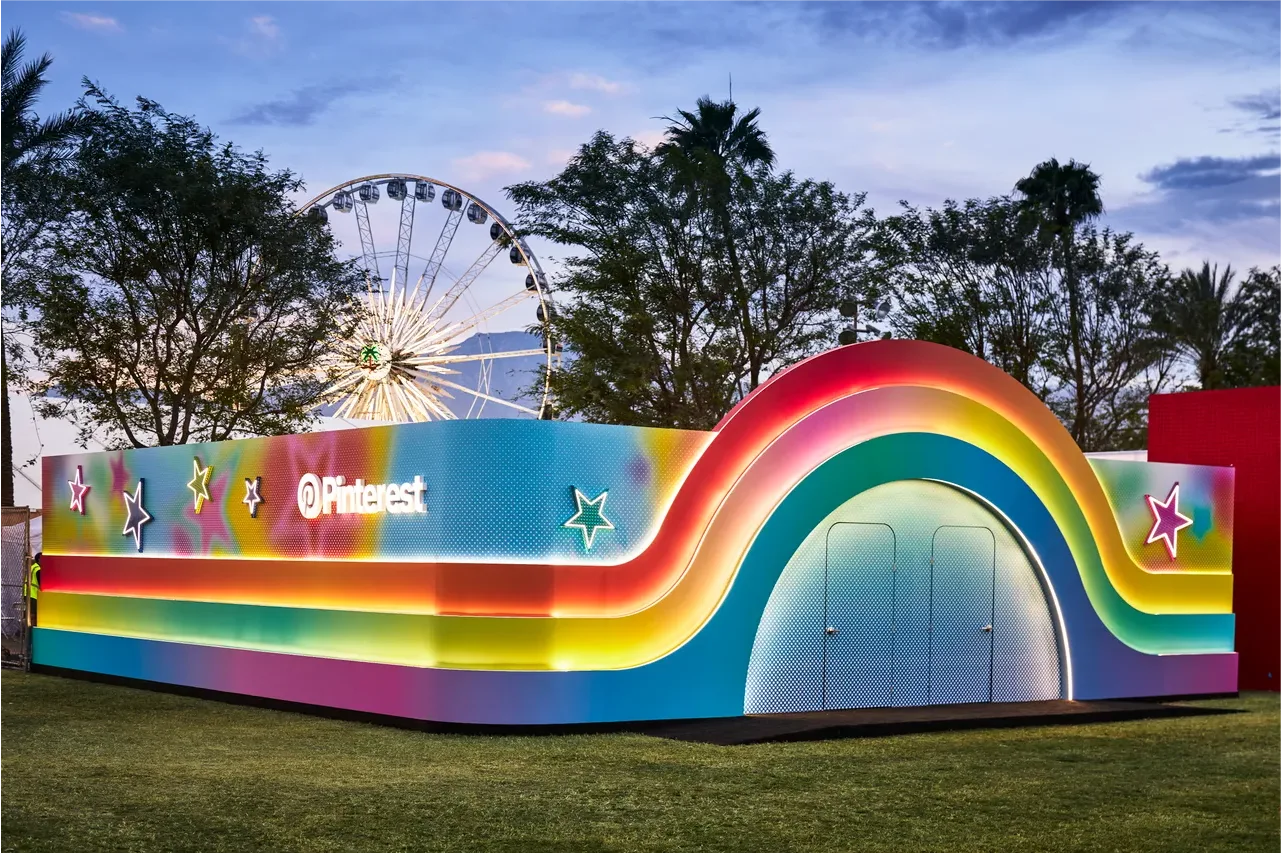
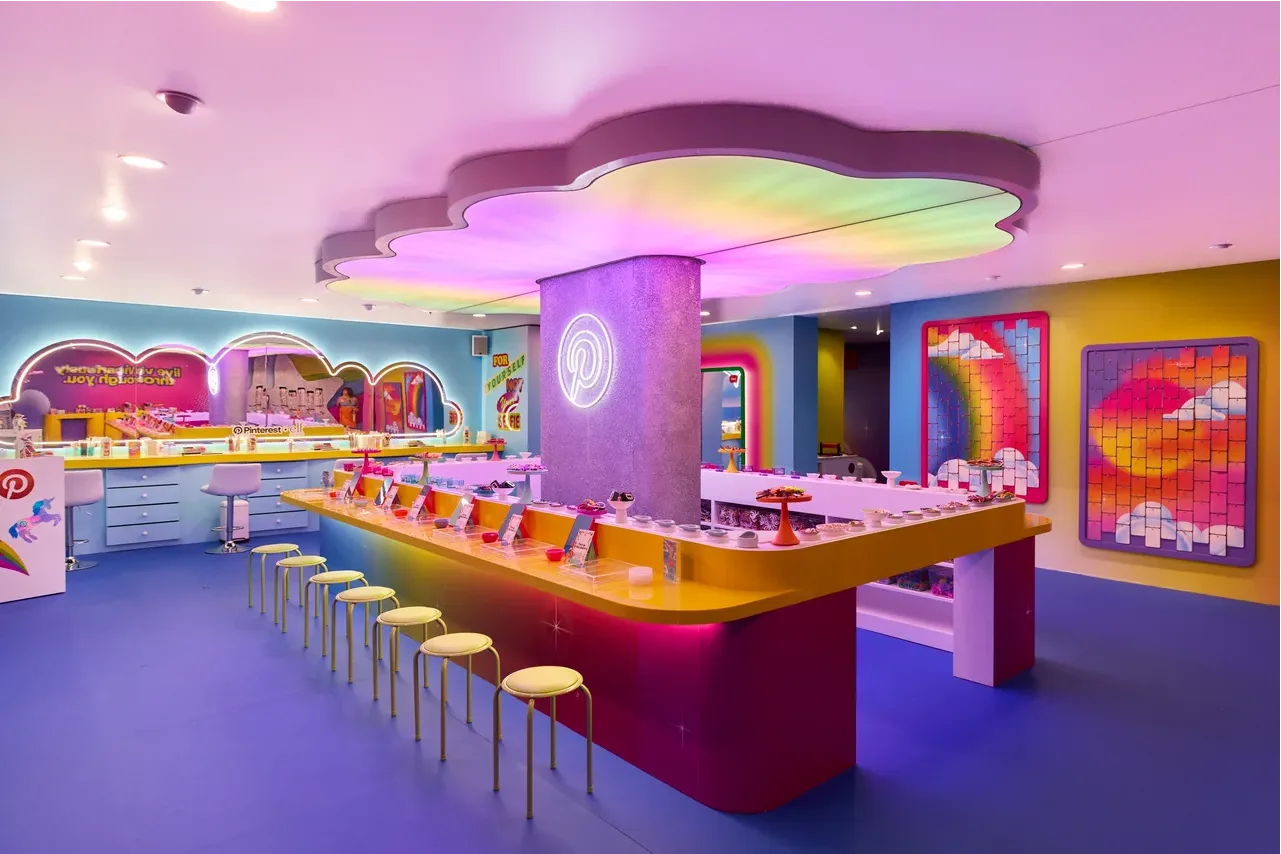
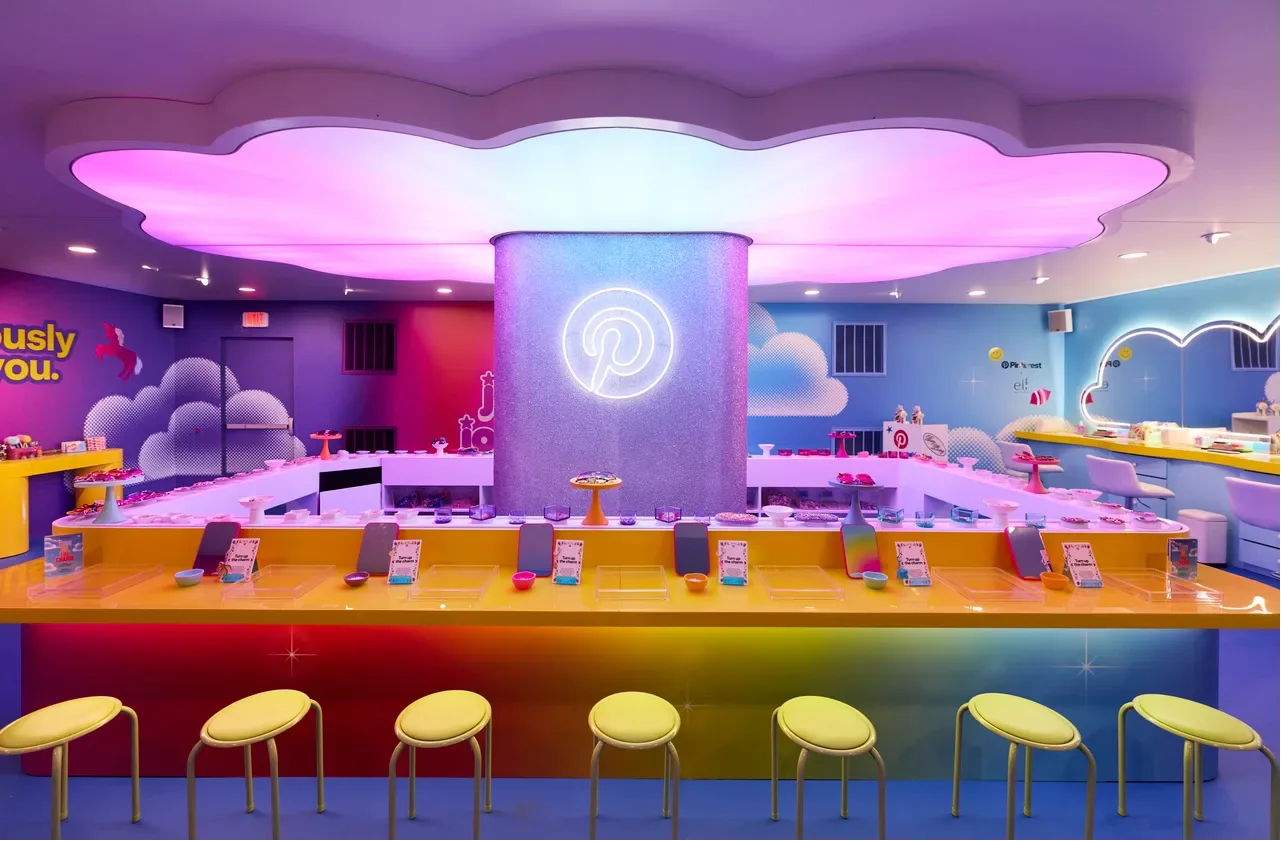
Pinterest locked devices at the door, offering beauty touch-ups, charm-making stations, and a printed joy guide people could mail to themselves after the weekend ended.
It said a lot about how experiential fabrication and event production continues to evolve. The brands that earned real attention at Coachella were not simply the ones with the biggest footprints. They were the ones that made deliberate choices about what they were building, why it mattered, and how people would experience it once they stepped inside.
The best brands built an experience in context, and not just visibility.
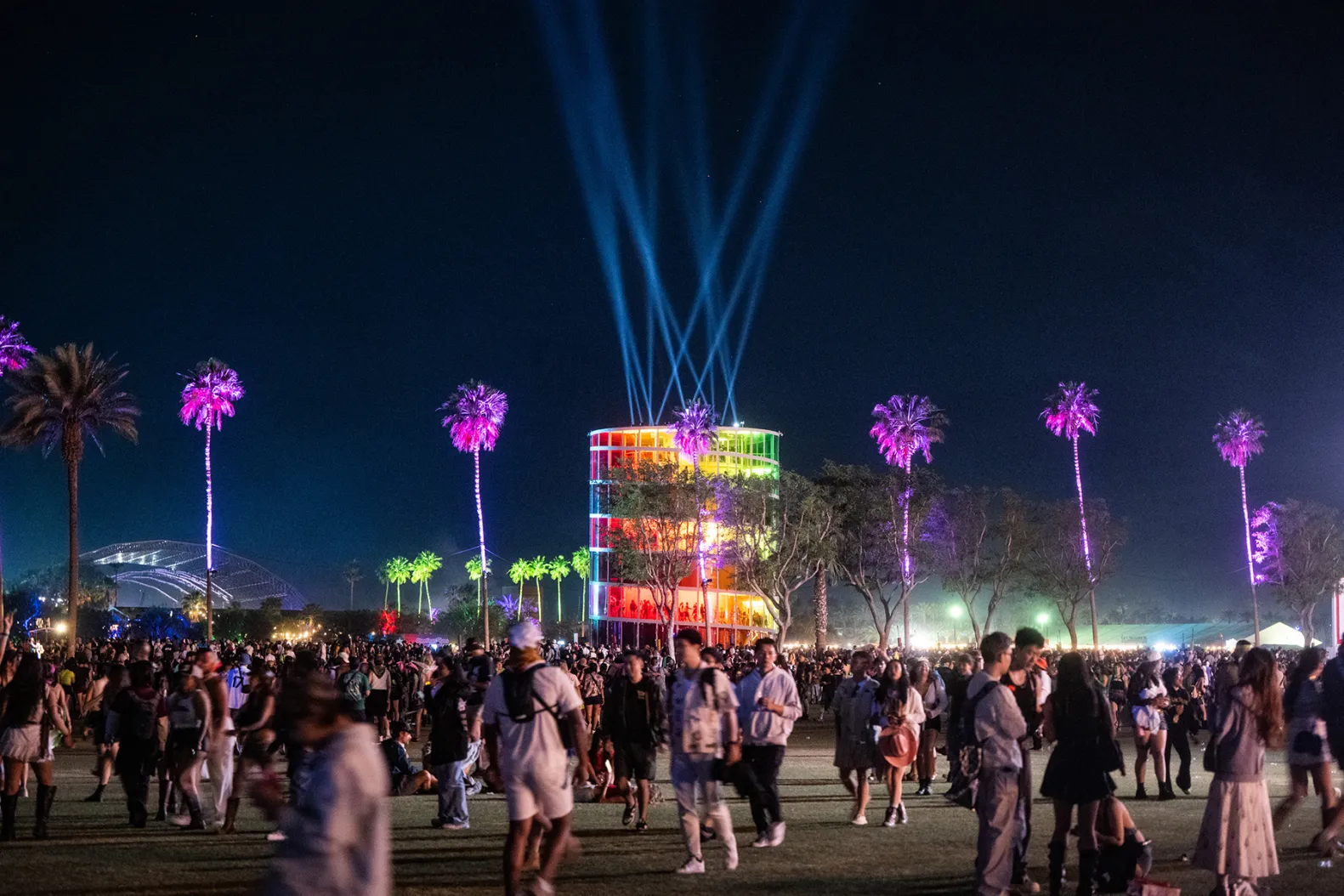
Coachella Is More Than a Music Festival
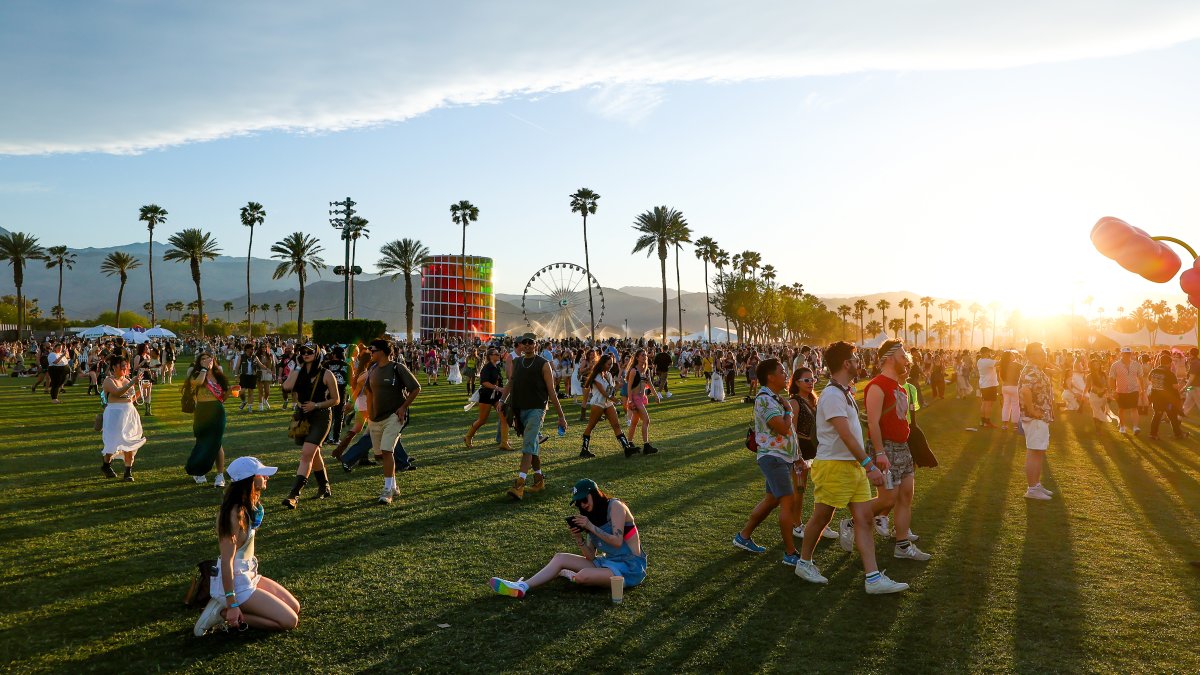
Coachella has long operated as more than a music festival.
It is a temporary city, a fashion signal, a hospitality test, and one of the clearest examples of how brands show up in culture without interrupting it.
For years, the default activation formula was fairly predictable: build a lounge, add some signage, hand out something cold, and hope it appeared on social media.
Visitors to the festival have long outgrown that formula.
The strongest brand environments at Coachella now have moved away from branded photo stops and free giveaways. They’ve become complete guest experiences, designed for an experience, hospitality, pacing, personalization, and social circulation.
A great build is no longer just about what the people see.
It has become about what the space allows them to do.
The Desert Shapes the Build
Coachella is one of the most demanding environments a brand activation can face.
Heat, dust, long walks between stages and activations, compressed install timelines, and an audience that has seen almost everything in a festivaly before they’ve stepped onto the grounds.
The brands that succeed are able to treat those conditions as design inputs instead of obstacles.
Protection from the heat and sun becomes a creative design decision.
Hydration becomes alluring hospitality.
Simple seating becomes a reason to linger.
Cooling elements, misting moments, sunscreen stations, and well-placed charging areas earn more goodwill than visual appeal that gives people nowhere to rest.
At a festival where guests walk for hours in desert heat, physical comfort becomes the foundation of any meaningful brand interaction. The best experiential design and fabrication services understand this. Comfort is not a concession to practicality. It earns the time a brand needs to land its story.
A great build is no longer just about what the people see. It has become about what the space allows them to do.
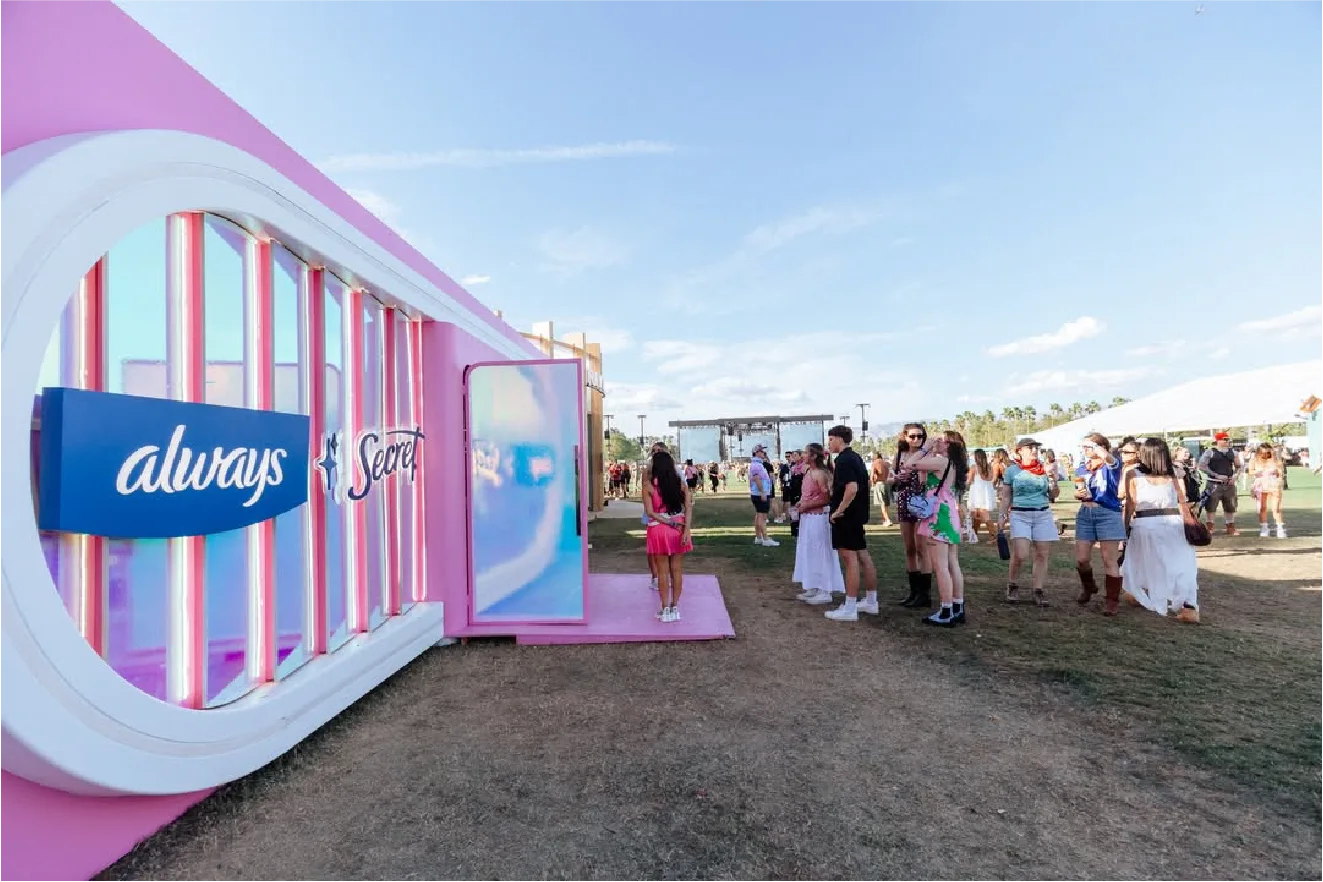
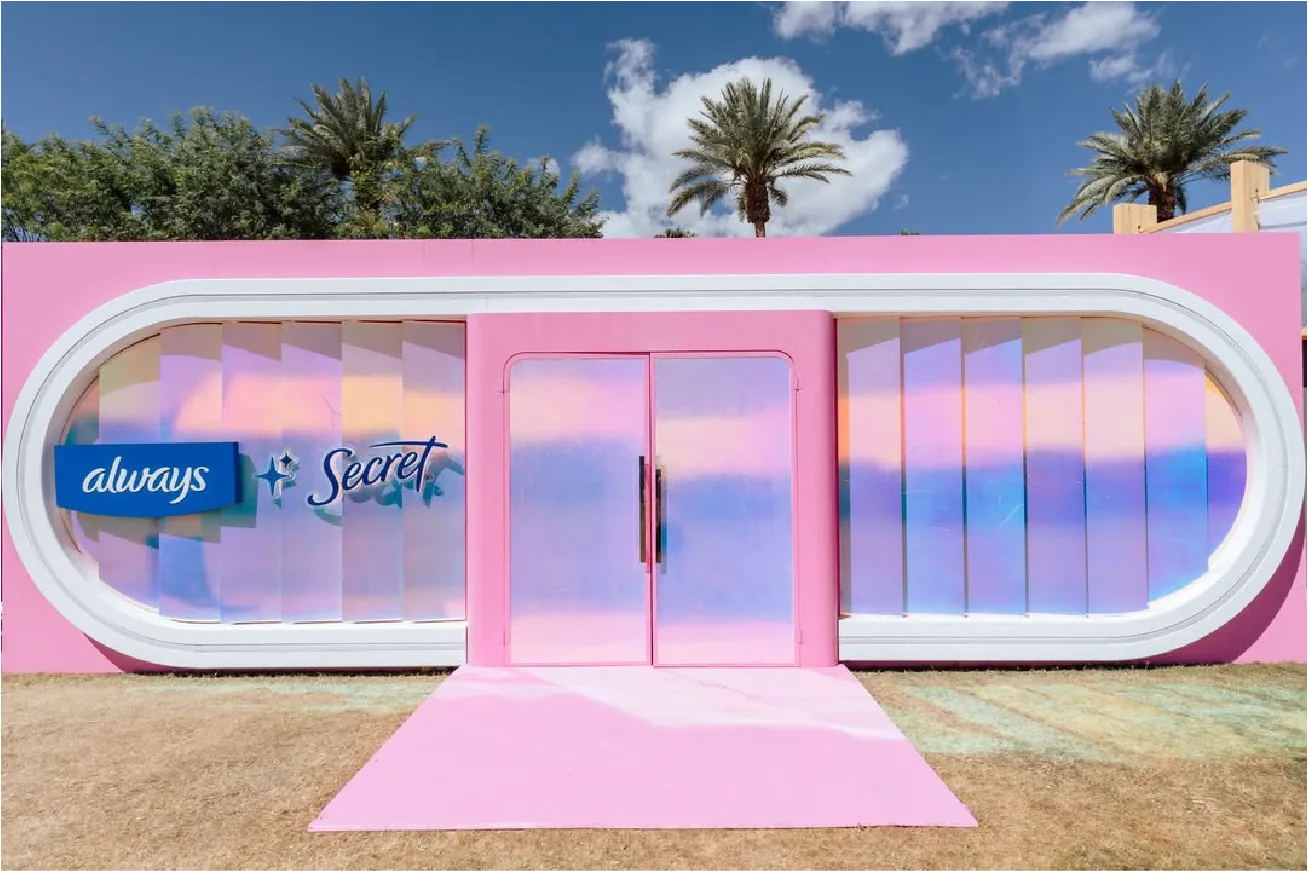
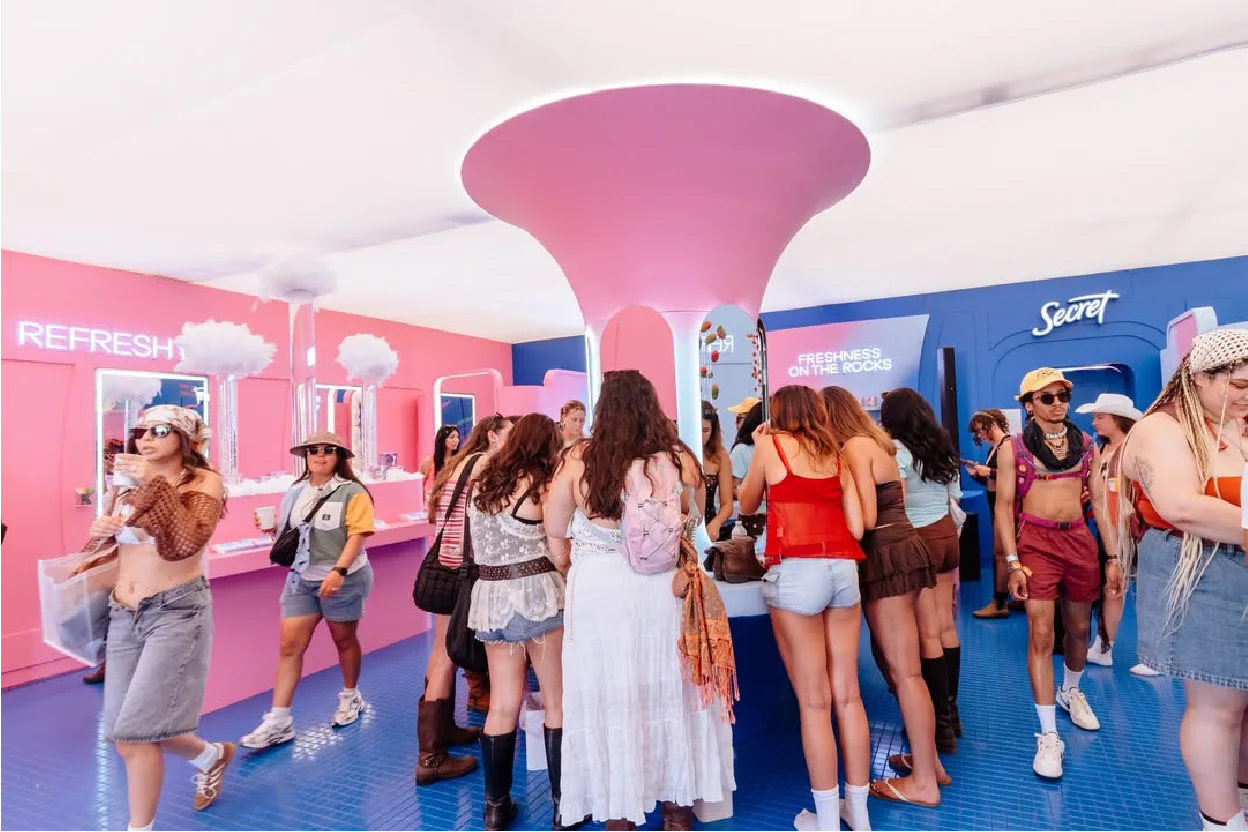
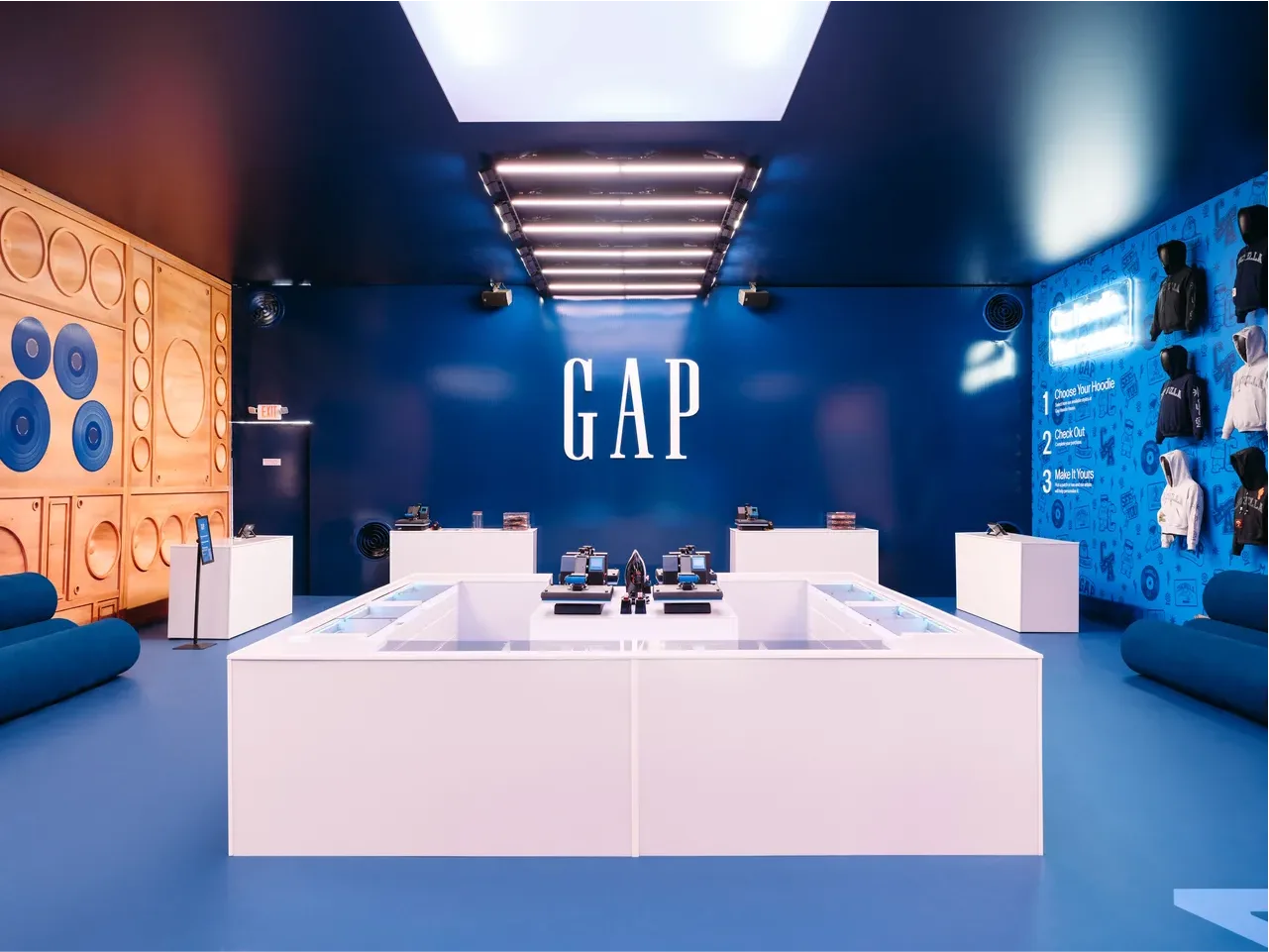
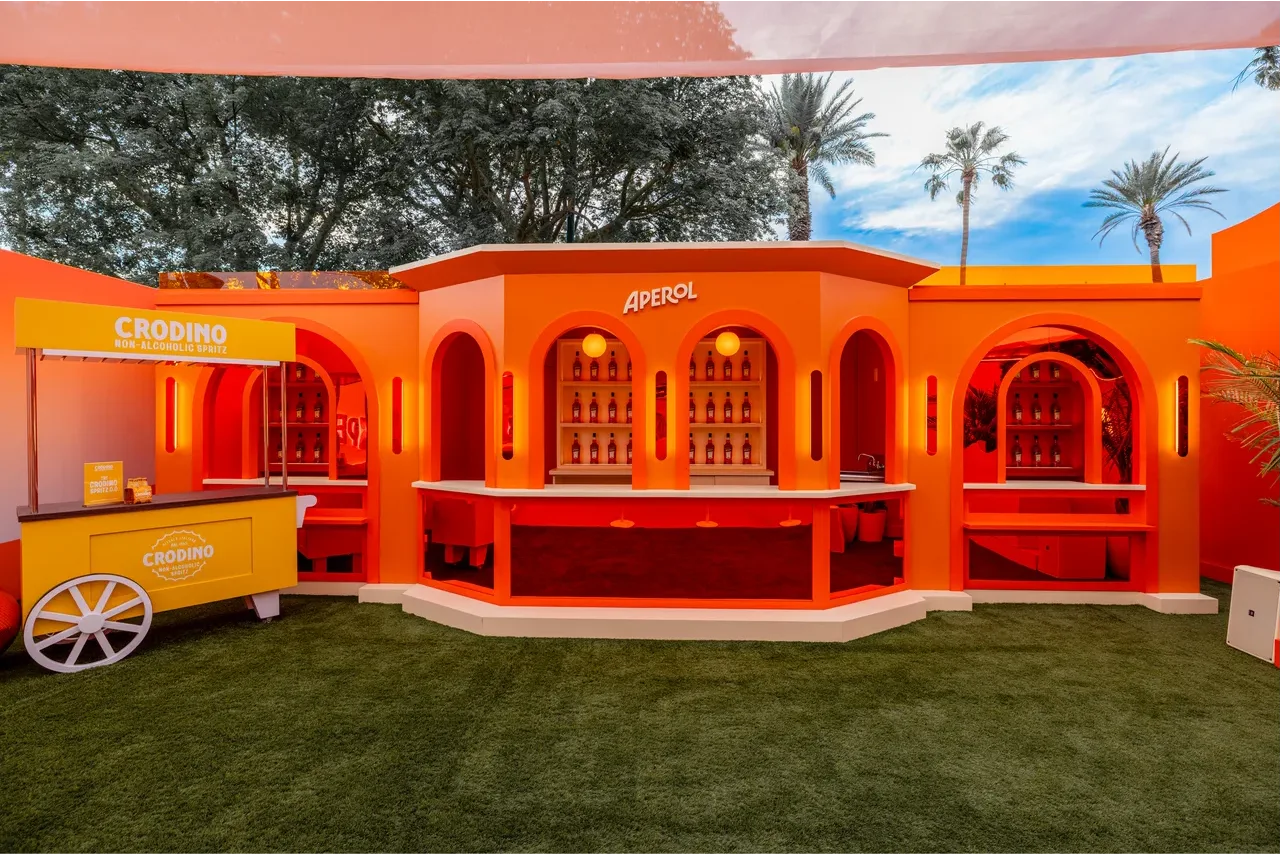
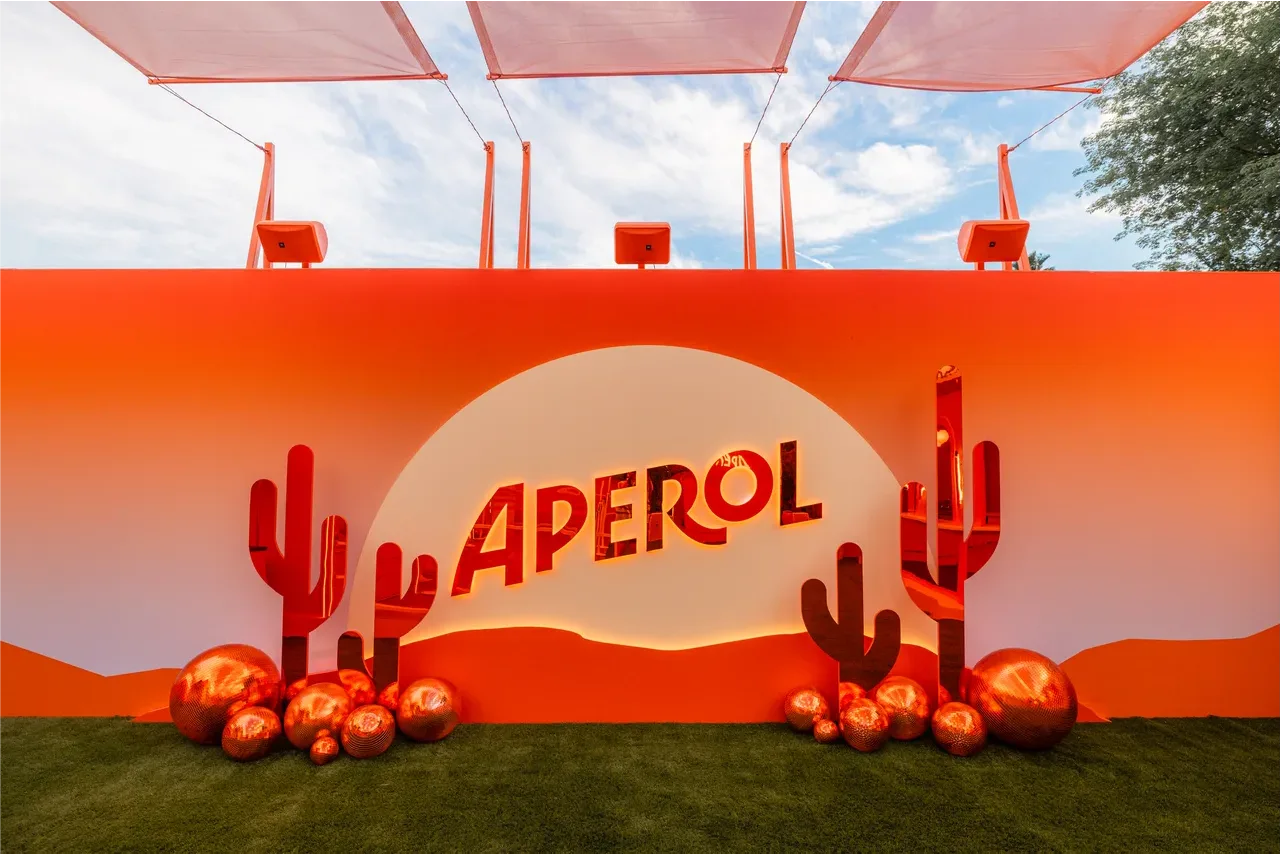
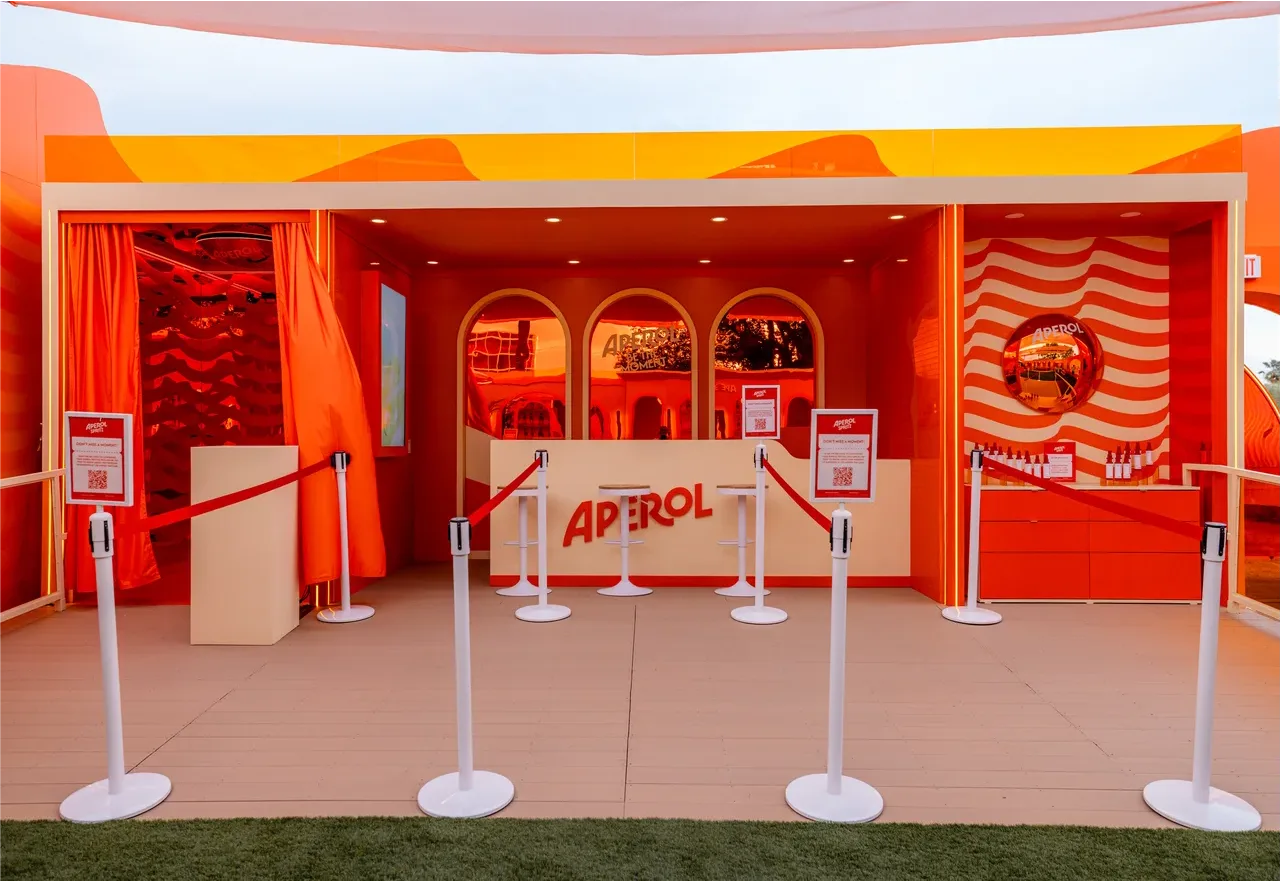
Several 2026 activations understood this clearly. Neutrogena distributed over 145,000 samples across the Coachella Valley and positioned sunscreen as a direct answer to a real guest need. Always and Secret took that thinking further with The Refresh Room — turning the festival bathroom stop into a branded reset moment with comfortable seating, hydration, and product sampling across both weekends. While brands like Gap and Aperol earned extended dwell time because guests had somewhere comfortable to be, not just something to look at. These activations were not built around photo moments. They were built to address a problem people at the festival actually experienced.
Practicality is increasingly the difference between an installation people photograph and an experience they remember.
At a festival, usefulness is not separate from creativity.
It is often what makes the creative idea work.
The Strongest Builds Created a Sense of Place
The strongest activations at Coachella 2026 borrowed their logic from scenic fabrication, not traditional trade show design.
They had depth.
They had texture.
They had a clear point of view.
Instead of relying on flat logos or generic branded walls, these environments used architectural volume, layered materials, elevated platforms, mirrored surfaces, lighting transitions, custom fixtures, and scenic detail to create spaces that felt considered from multiple angles.
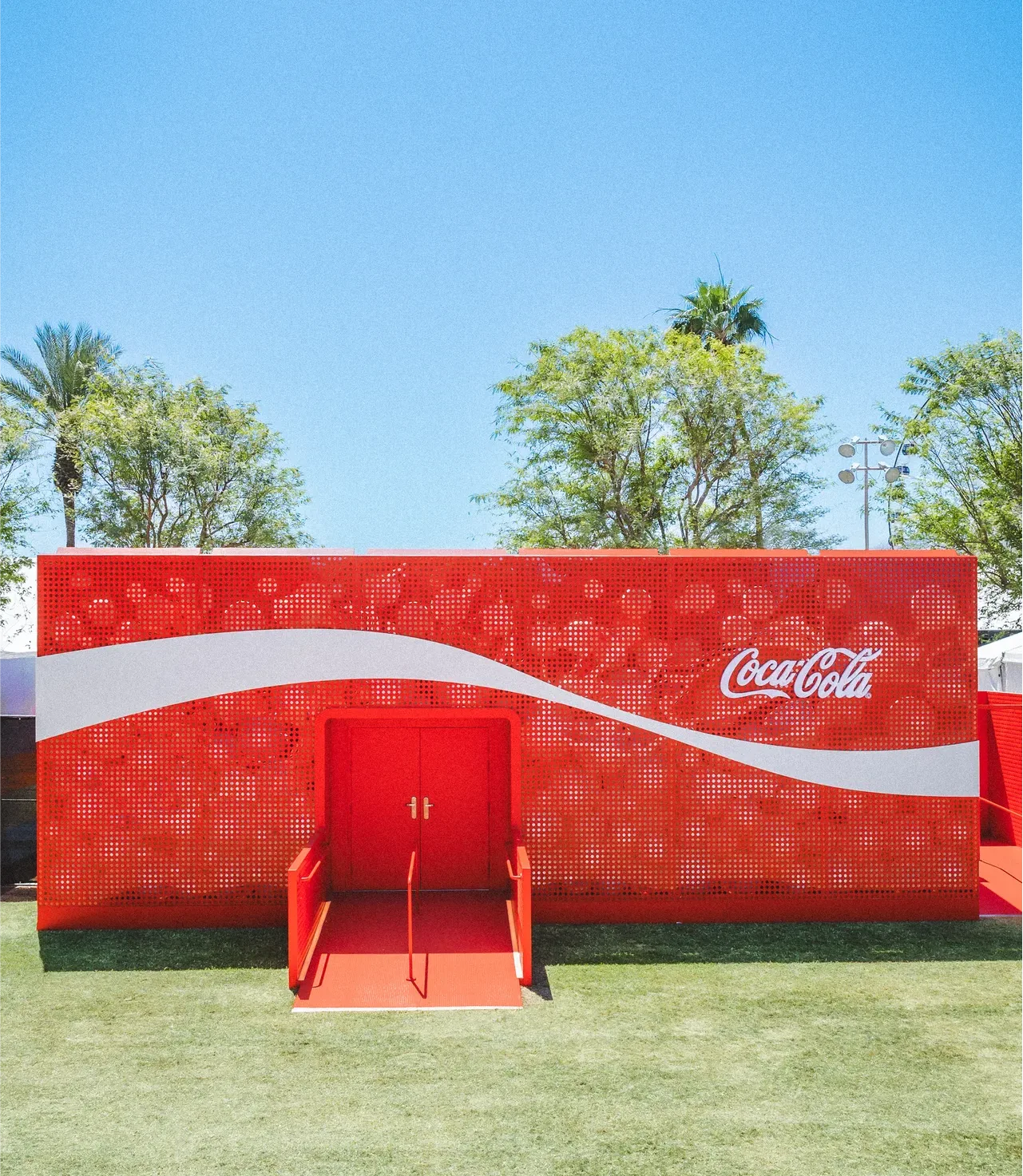
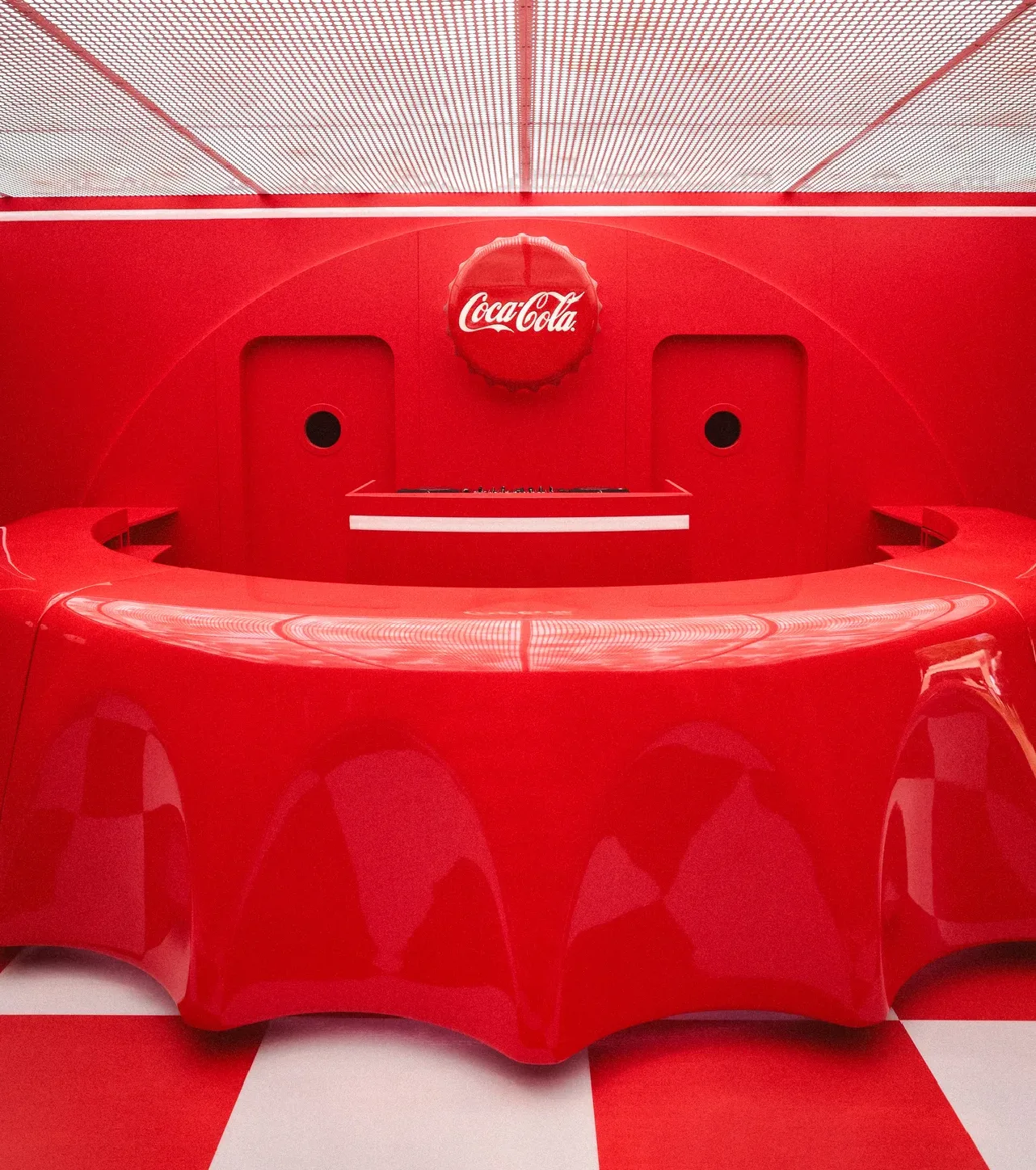
Coca-Cola’s Pop Shop rebuilt a retro diner in the middle of the desert — oversized fizzy bubble elements on the exterior, classic floats inside, and instant-win games layered throughout. It was not simply a branded tent. Guests entered something with a beginning, a middle, and an experience to remember.
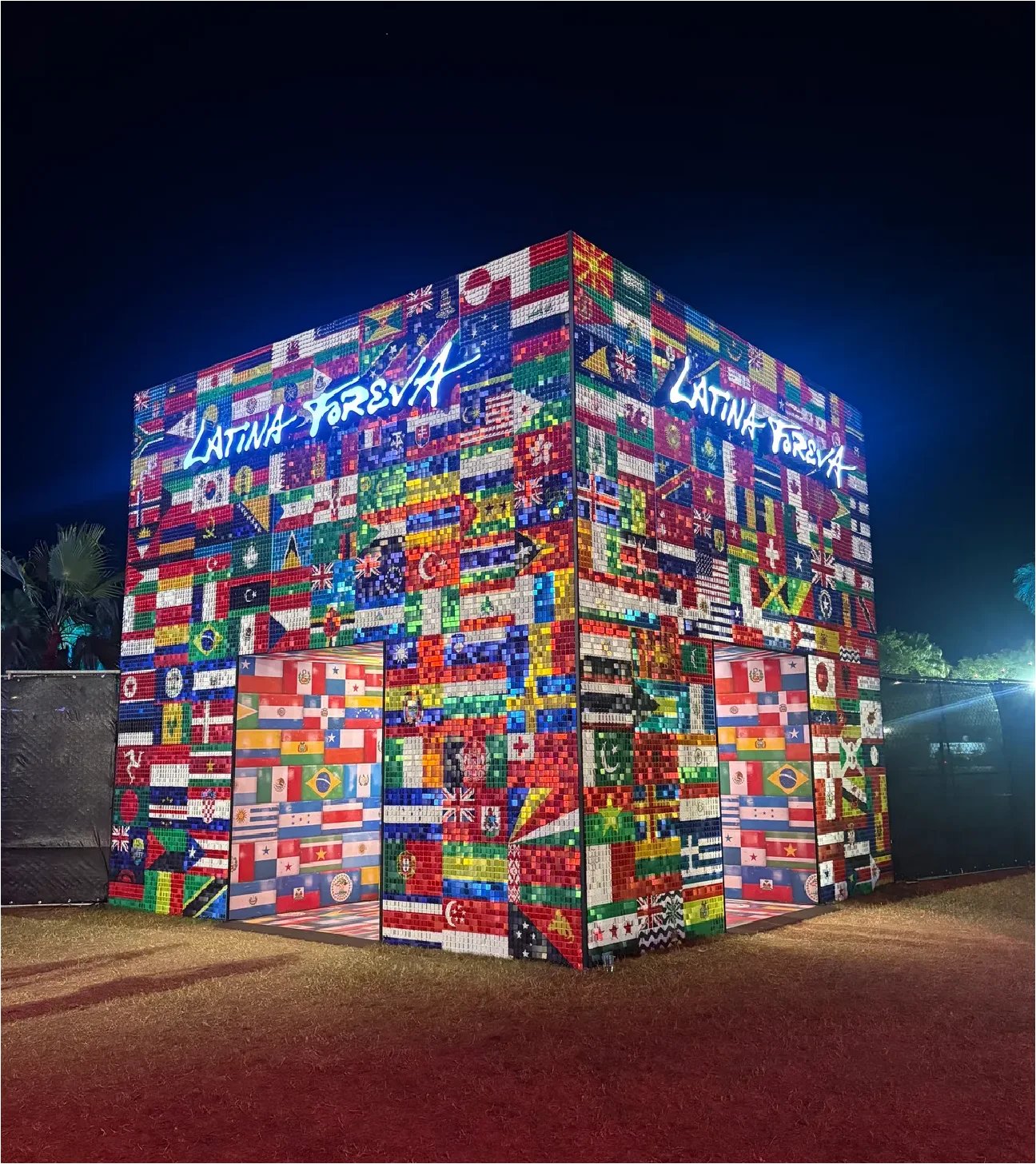
The Karol G installation, built to mark her historic headline performance, showed what custom scenic fabrication services can achieve when architecture and storytelling operate as one. The exterior was clad in shimmer tiles embedded with national flags, shifting with the light across the day. Inside, guests moved through walkway pockets wrapped in world map graphics across walls, ceiling, and floor. That kind of build carries differently in person than it does on a screen — which means people who experienced it remembered it in a way photographs cannot fully replicate.
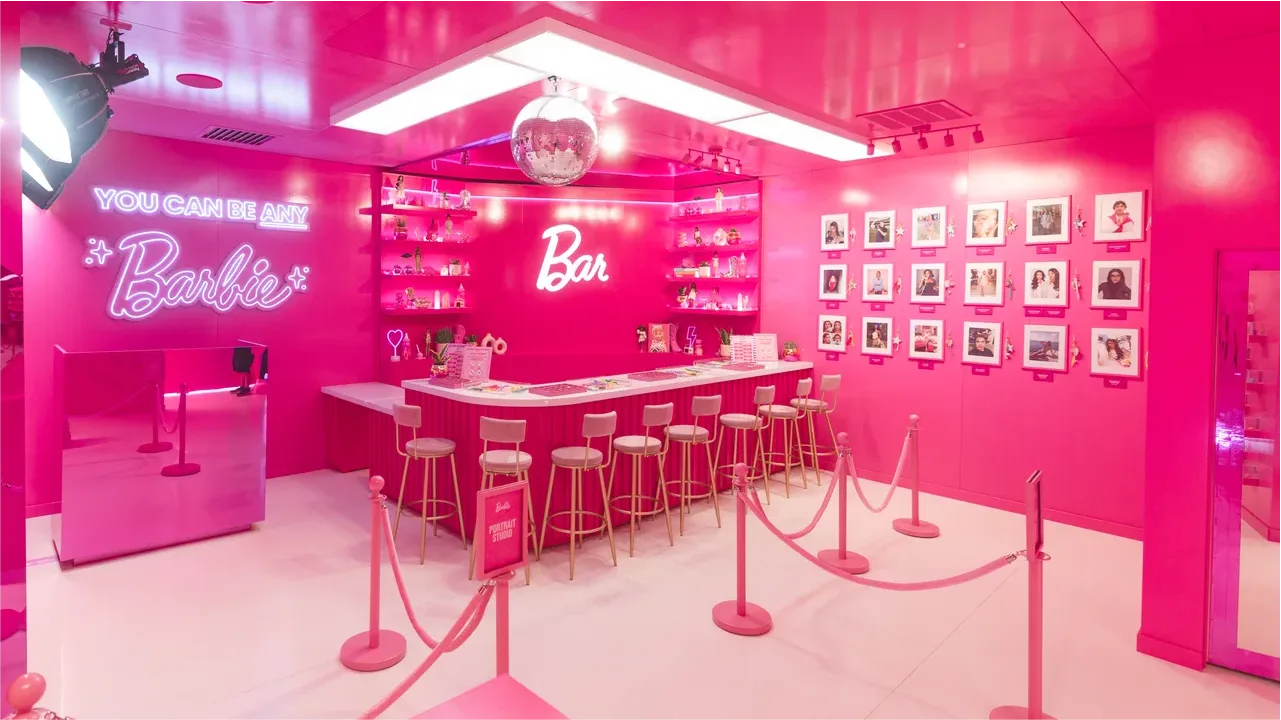
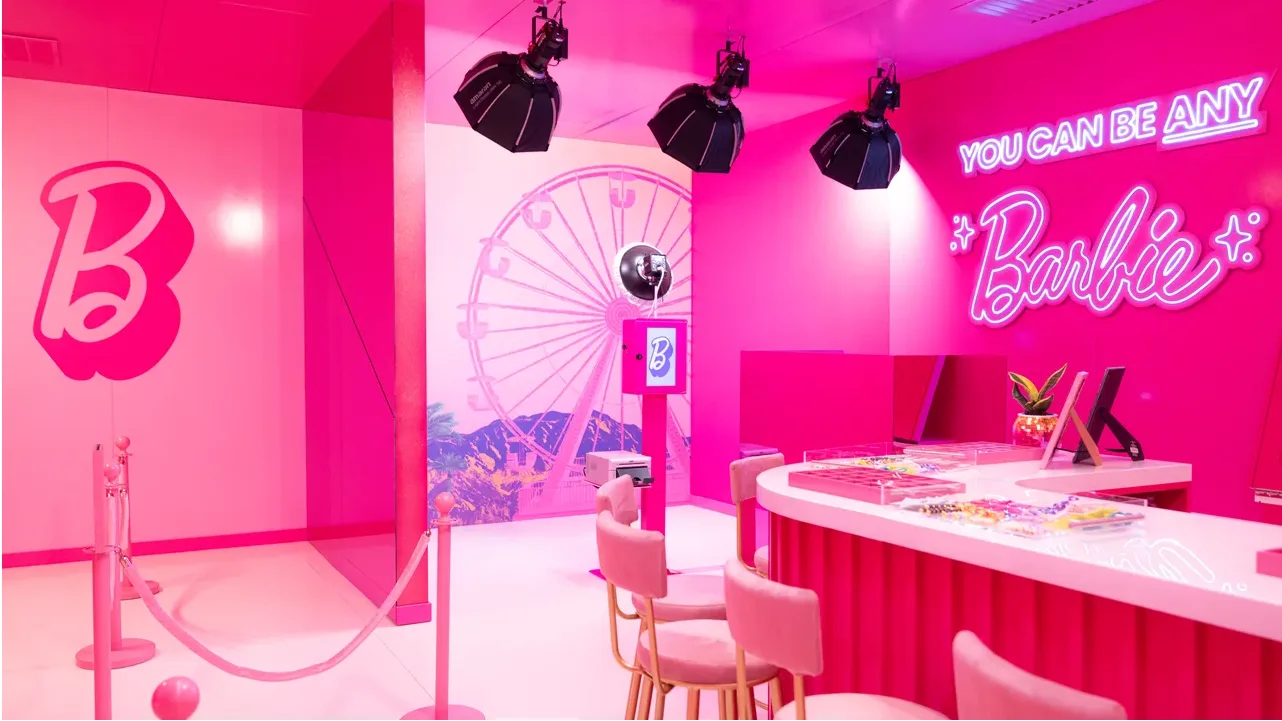
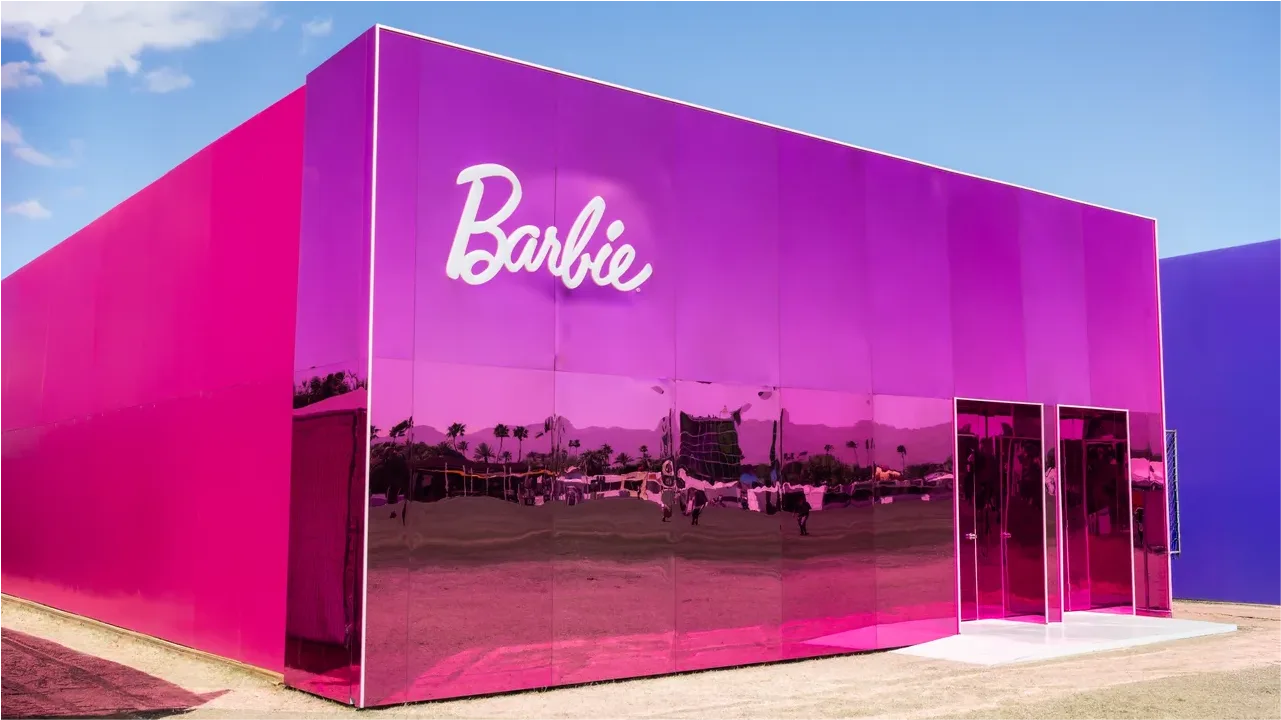
Barbie’s debut Coachella activation worked because it gave guests a sequence. An entrance gallery, a persona-driven charm bar, a portrait studio, and a clear exit memory. Guests did not wander in and wander out. They moved through something deliberate.
That sequencing is one of the clearest marks of a well-executed experiential build.
The Details Determine if a Space Feels Authored or Assembled
Some brands leaned into immersion by creating environments with a specific point of view: a retro diner, a beauty playground, a members-club oasis, a music-driven lounge, a personalization station, or a product ritual with real tactile depth.
The details mattered.
A counter height, a tiled bar, a branded parasol, a sculptural fixture, a shaded seating area, or a custom-built stage moment signaled whether the space felt intentional or simply put together.
This is where experiential fabrication becomes central to the brand story.
A desert activation has to look effortless while surviving intense sun, wind, heavy foot traffic, fast load-ins, and immediate public judgment. The final experience depends heavily on design and execution. The more seamless the guest experience appears, the more planning, engineering, and custom event fabrication sit behind it.
Giving Guests Something to Do
Coachella guests do not need another place to stand around.
They need a reason to engage.
The stronger brand environments gave attendees clear actions: customize, sample, explore, rest, watch, create, collect, or participate.
Pinterest invited guests to put their phones away and interact through beauty moments, charm-making, keepsakes, and printed guides.
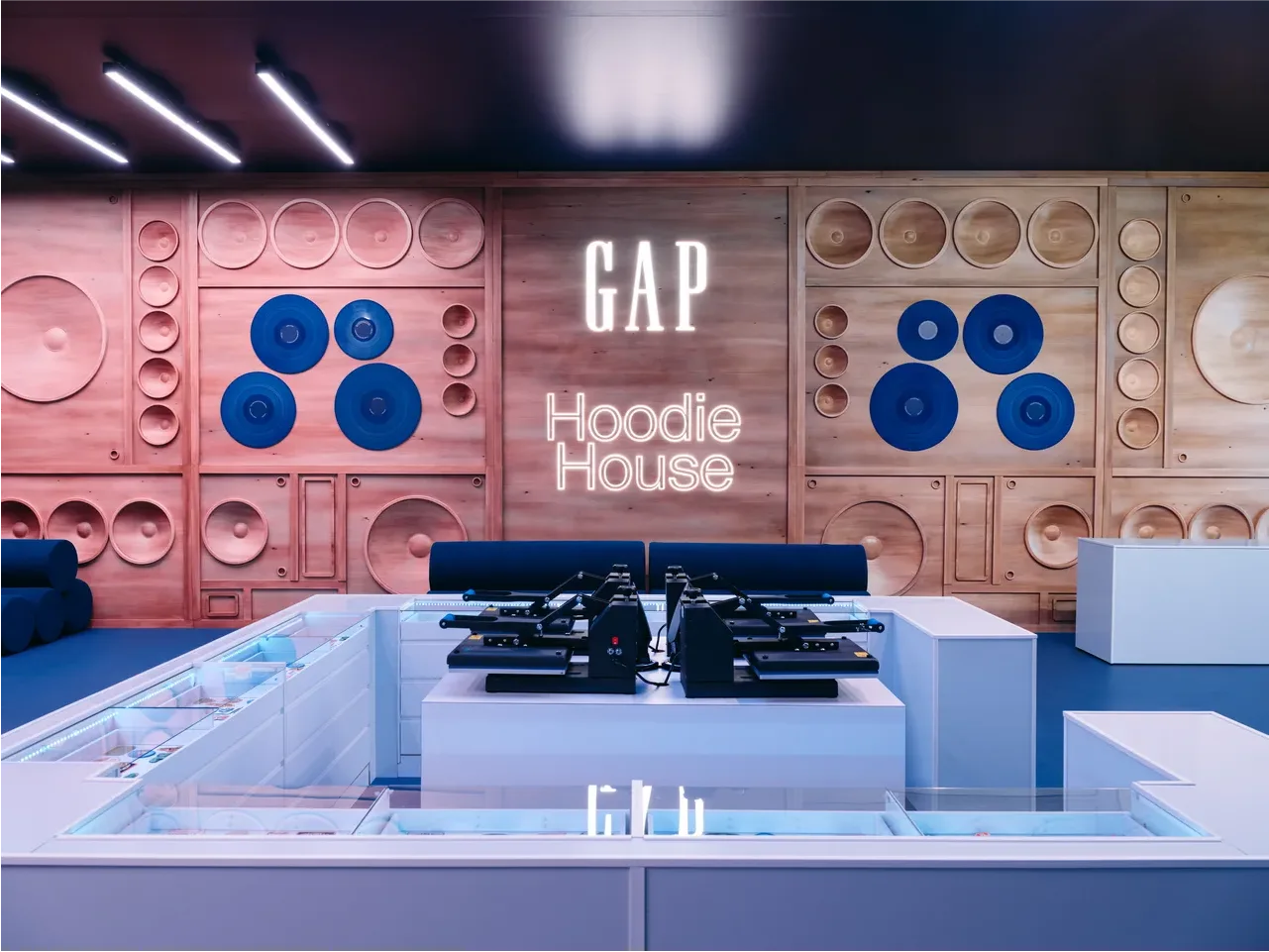
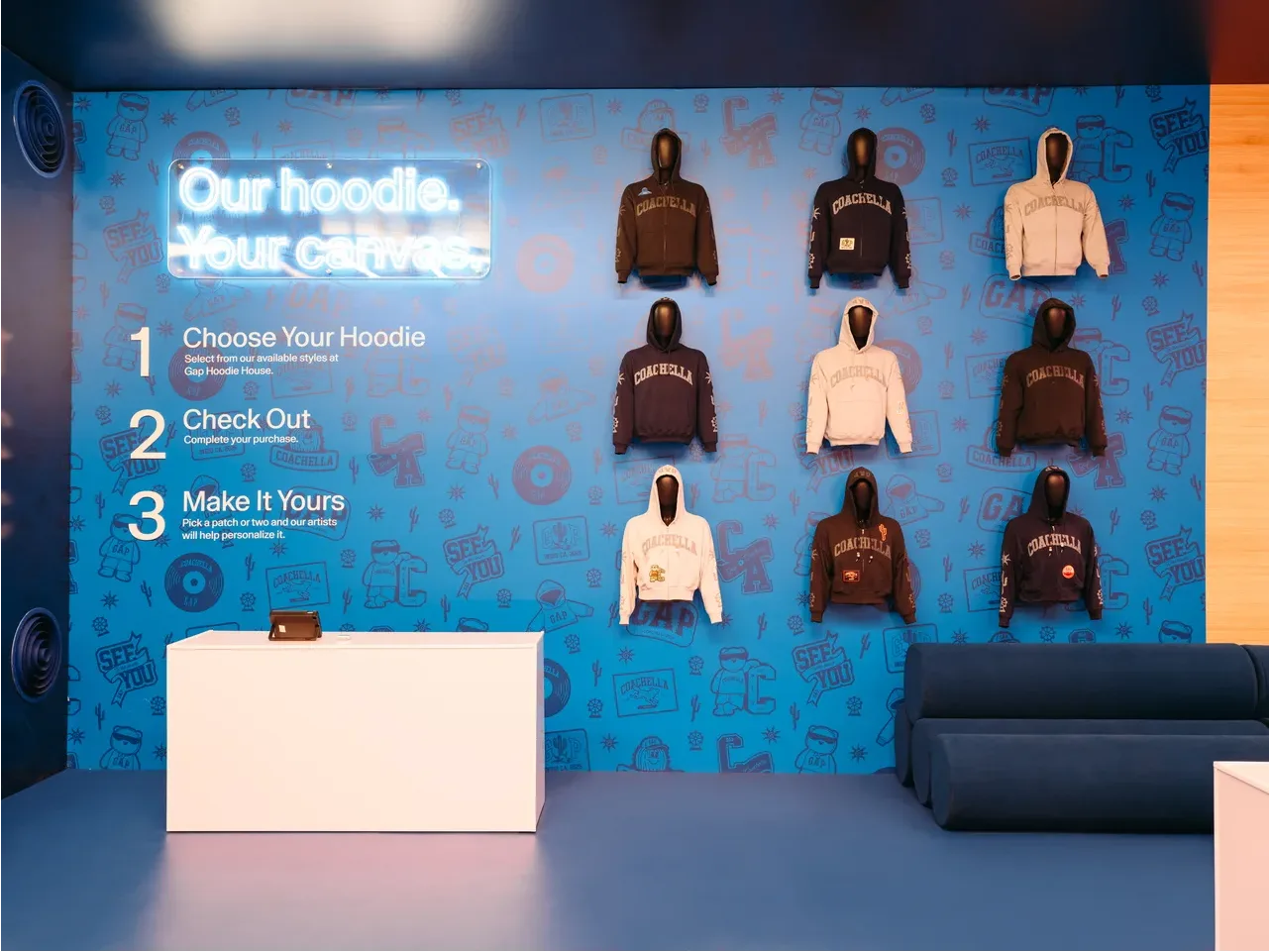
Gap’s Hoodie House gave festival-goers a clear, tactile activity: choose a hoodie, customize it with patches, beads, and charms, and leave with something personal.
Barbie gave guests a role to play, becoming their own Barbie character.
Coca-Cola gave guests a place to escape the sun with their product experience.
These activations worked because they did not simply ask for attention.
They offered participation and gave something real that guests needed.
That’s the big difference between a brand presence and a guest experience.
Brand presence says, “Look at us.”
While brand experience gives people something worth doing.
For experiential marketing agencies, producers, and brand teams, that distinction shapes everything about how a build gets designed and what it actually delivers on the ground.
Solving Real Festival Problems
Not every standout activation at Coachella 2026 was built around spectacle.
Some of the smartest brand environments were built around a real, unmet guest need.
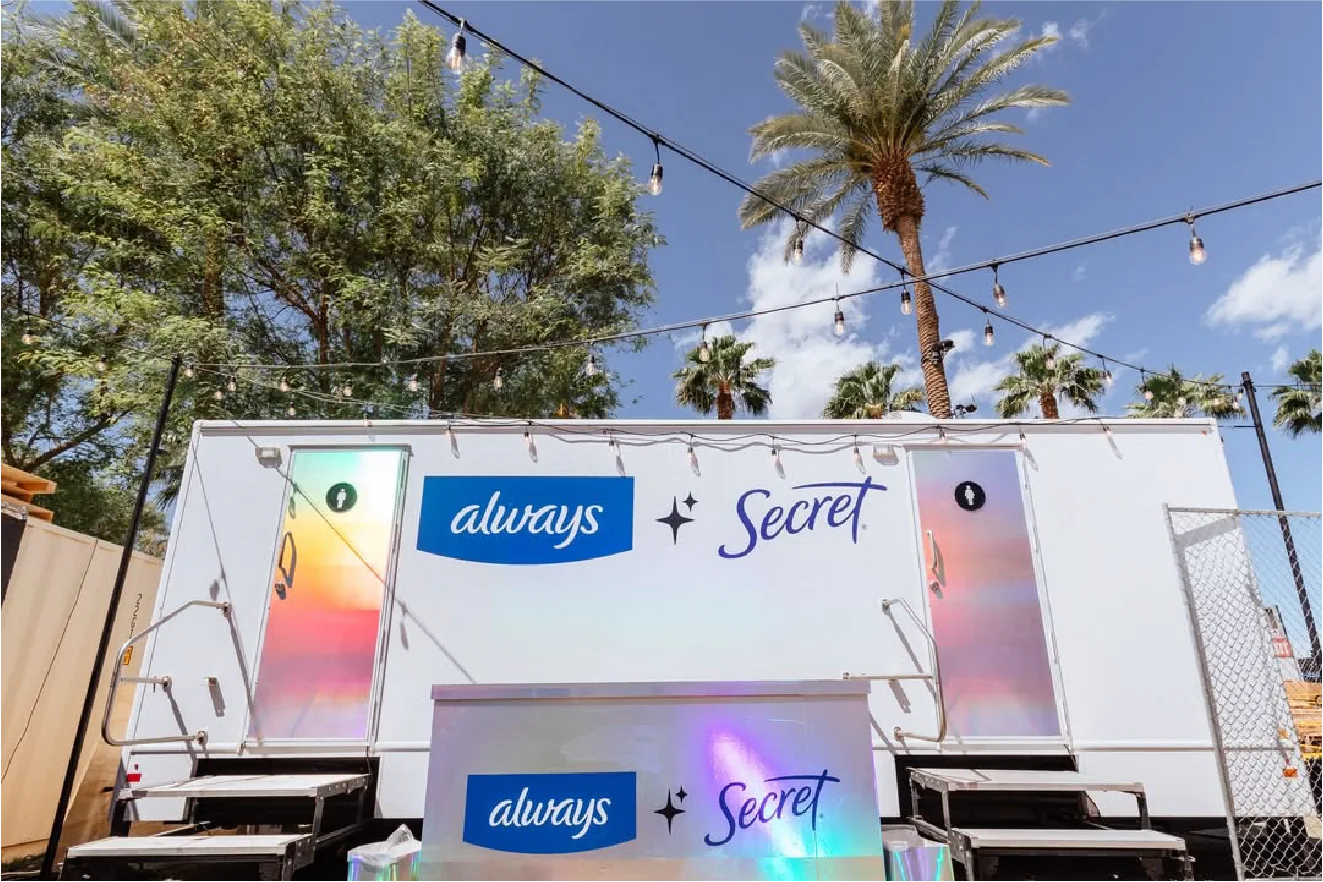
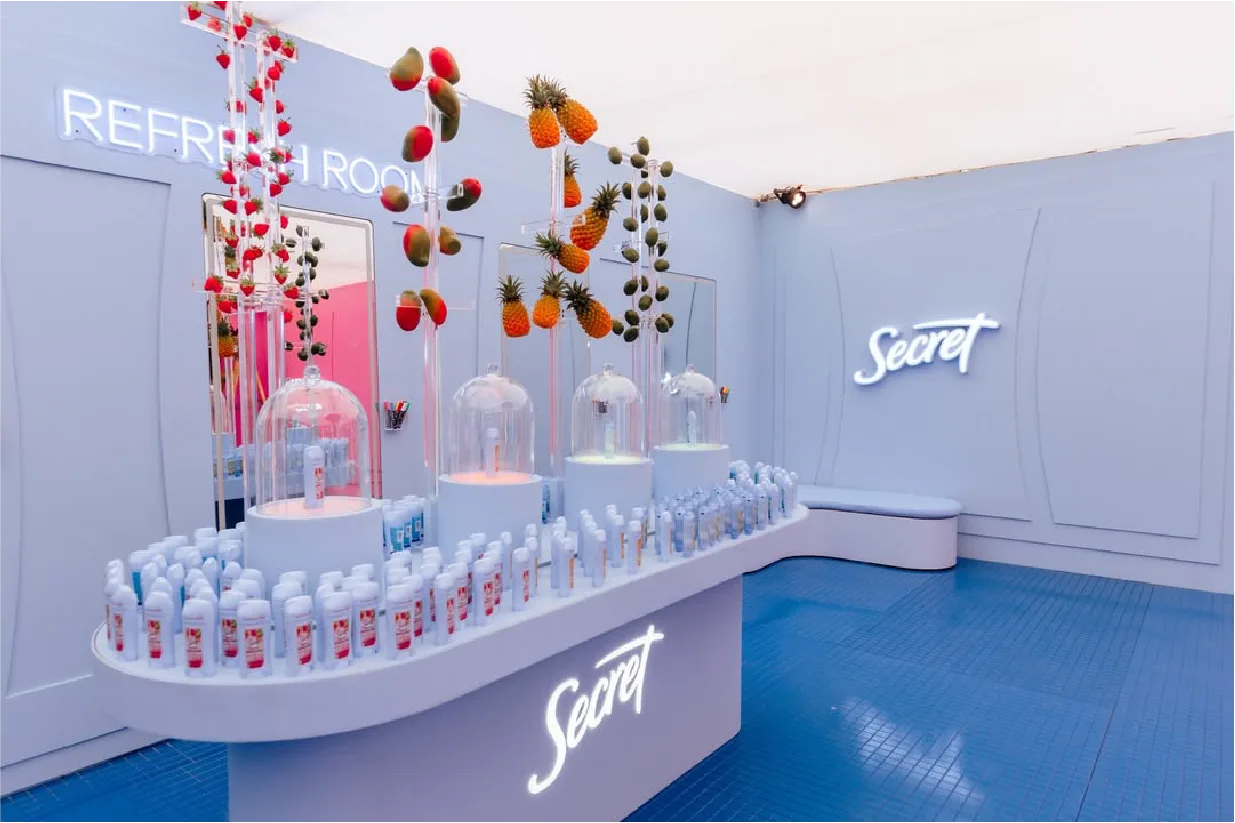
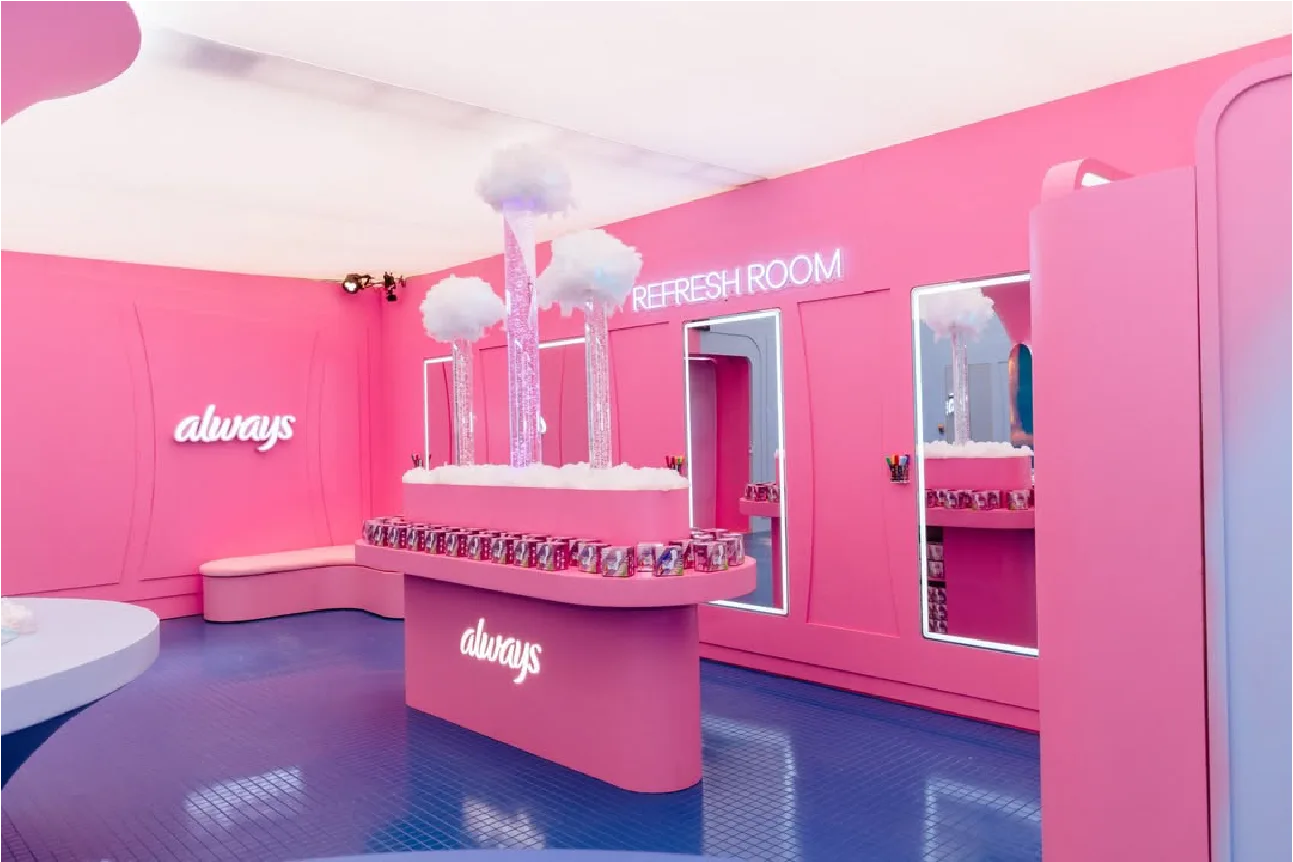
Always and Secret’s Refresh Room is one of the clearest examples.
Instead of building another lounge or photo moment, theses brands addressed something almost every female festival-goer deals with: the bathroom experience.
Research commissioned for the activation found that clean restroom access ranked as the top festival priority for women, with nearly two-thirds saying being on their period negatively affected their overall festival experience.
The Refresh Room turned that problem into a brand moment. The activation transformed the traditional festival porta-potty into what the brands called a “Porta-Party” — a lounge-style space with comfortable seating, hydration, product sampling, and the kind of care that made a functional stop feel like an actual reset.
It ran across both weekends, and required expert fabrication, spatial planning, plus operational coordination to pull off at a festival scale. It worked because it gave women something genuinely useful, in a place where they already needed to stop.
That is the version of experiential marketing that earns loyalty rather than just impressions.
The build did not interrupt the festival experience.
It improved it.
Three Things Separated the Best Builds
Across the strongest activations, three things consistently appeared.
1. They designed a journey. Not just a moment.
Strong experiential production thinks in sequences.
The approach. The reveal. The interaction. The content moment. The exit memory.
At Coachella, that sequence has to feel intuitive because no one wants to interpret a map or read instructions in triple-digit heat. The guest needs to be led without feeling managed.
The brands that did this well gave people something to discover at each stage. While other with impressive facades and nothing specific to experience inside, felt that gap quickly.
2. They respected the production reality.
Fabrication for live events operates under a completely different set of constraints than retail, hospitality, or permanent installation work.
Everything must be transported, installed, inspected, staffed, maintained through dust and heat, and struck on a festival timeline. Camera-ready finishes need to hold up through real foot traffic, not just a red carpet photo shoot. Materials need to survive desert conditions and constant guest interaction. Structures need to support flow, safety, access, and visibility.
This is where custom event fabrication, live event production, and scenic construction stop being separate disciplines and start working as one system.
Entertainment timelines, permitting requirements, structural sign-offs, and high-visibility public environments require coordination that goes well beyond the build itself. And the best experiential fabrication companies have built deep expertise around these constraints.
A well-executed activation represents a significant amount of invisible work.
The concept is only as strong as the system behind it.
3. They understood that scale is not always about size.
At Coachella, bigger does not automatically mean better.
A smaller, highly resolved environment with a clear reason to gather consistently outperforms a large footprint with no emotional center.
Pinterest’s phone-free experience was intimate by design. Barbie’s charm bar showed how a focused participatory moment creates meaningful engagement without relying on massive scale. A shaded lounge, a product ritual, or a private content studio can generate more cultural value than a sprawling structure that lacks purpose.
At a festival built around access, identity, and discovery, intimacy carries its own status.
What This Means for Event Production
The role of the event production company has expanded considerably.
Brands are no longer asking production partners simply to execute a design. They are asking them to solve for audience flow, artist integration, permitting, fabrication, scenic detail, staffing, safety, sustainability, and content capture — across a compressed timeline, in an environment with essentially no margin for error.
That is what 360 event management looks like in practice.
It connects the creative idea to the operational system that makes the experience work, across every discipline and every phase of the project, from concept sign-off through strike.
The strongest brand activations at Coachella had that connection in place. The creative and operational were not running in parallel. They were integrated to work together from the beginning.
For brands, agencies, and producers planning their next experiential marketing fabrication, that integration matters more than almost any other single decision. A beautiful rendering does not create a memorable activation by itself. The real work happens when creative direction, full-service event production, custom scenic fabrication services, logistics, site conditions, audience flow, and production management all support the same outcome.
The Best Brands Knew Their Role in the Festival
The smartest brand spaces at Coachella 2026 did not try to compete with the main stages.
They offered contrast.
After hours of crowds and sound bleed, a controlled environment feels valuable. After a long walk, a seat feels generous. After constant spectacle, a focused tactile interaction feels surprisingly memorable.
A brand has to know what role it plays.
Is it offering rest? Access? Status? Utility? Product trial? Entertainment? Personalization? Connection?
Without that clarity, a build can look expensive and still feel empty.
The brand activations that worked well knew their role and built to make it a reality.
They were not decorating the desert. They were solving for a specific moment in a specific guest’s day.
Building the Idea Into Reality
Behind every strong activation is a chain of decisions that connects creative vision to production reality.
That chain includes experiential design, custom event fabrication, scenic construction, staffing, logistics, vendor coordination, audience flow, safety planning, content capture, and 360 event management across every phase of the project.
For Los Angeles event production companies, experiential marketing fabricators, and live event production partners, this work requires creative sensitivity and operational discipline at the same time, often under timelines that leave no room to figure it out on site.
The best builds make that complexity feel invisible.
Guests experience the shade, the music, the finish, the interaction, the pacing, and the moment.
They do not see every production decision that made it possible.
That is the point.
At Coachella, the brands that stood out were not simply decorating the desert. They built useful, memorable, highly specific environments — whether that meant a scenic world with custom fabrication and architectural depth, a tactile personalization moment, a phone-free room that invited presence, or a functional space that solved a real problem people had every day of the festival. Enough function to serve people. Enough craft to feel credible. Enough clarity to make people want to stay.
Your Next Big Idea Can Be More Than Just An Idea
If you’re looking for an experiential fabrication partner or a live events production company with the scale to handle six-figure projects, Fuller Street is here to support you. We know the stakes. And we deliver work that elevates your brand relationships.
When fabrication becomes part of the narrative, brand experiences move from forgettable walk-by moments to those filled with deep participation and brand loyalty.
Let’s build something people will talk about.
Contact Fuller Street and let’s build your next experiential fabrication.
Imagine what we can create together.