Experiential Marketing: How Immersive Builds Turn Moments Into Movements
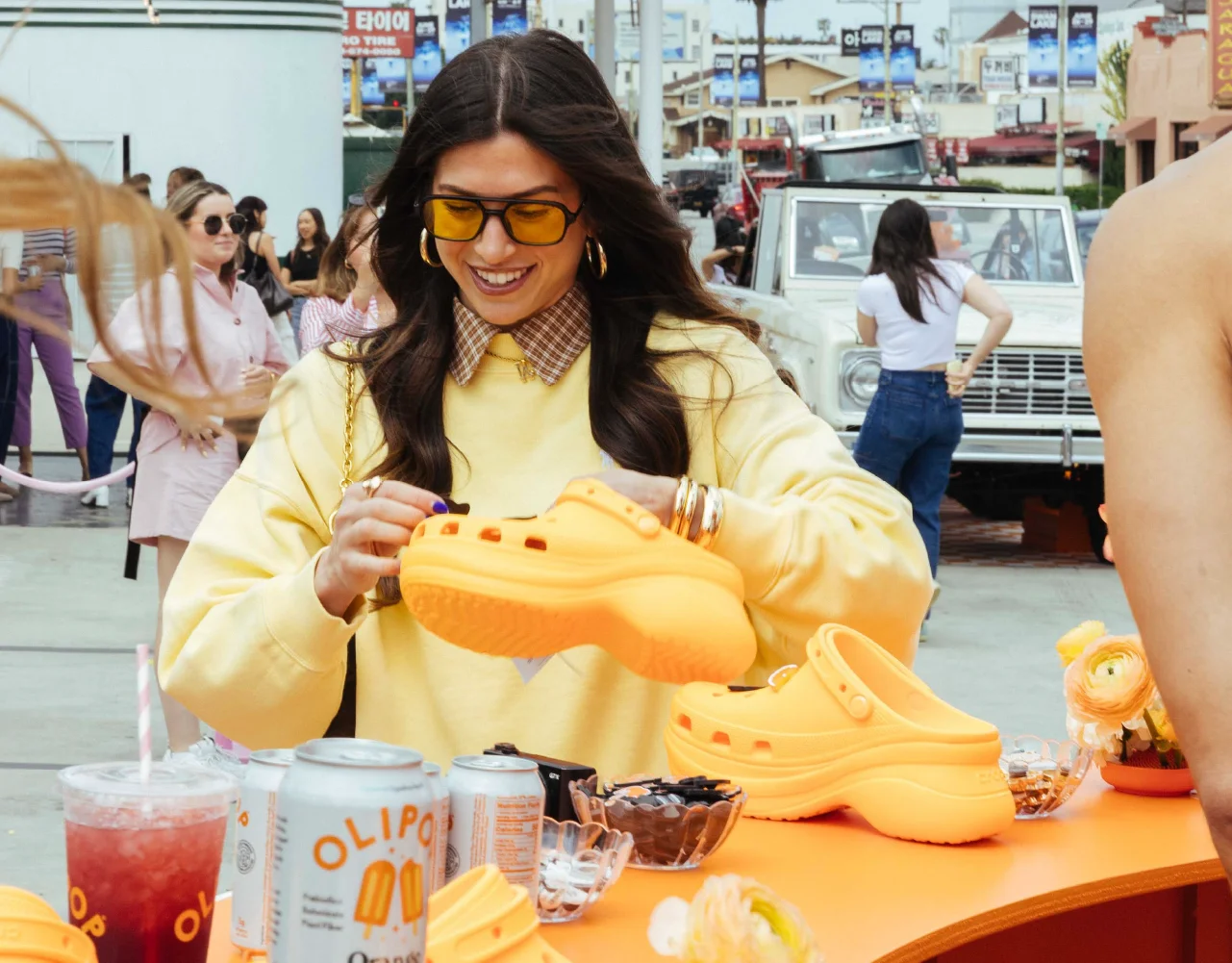
Experiential marketing has moved far beyond simple photo-ops and red carpet moments. The most effective brand campaigns feel less like advertising and more like alternate realities where temporary worlds are created for audiences to step inside a story, experience it, and carry it with them long after the event ends.
The driving force behind that shift is a discipline that often stayed inconspicuously behind the curtain. But today, experiential fabrication for marketing events has become the quintessential bridge between a pitch deck idea and a real-world environment that can engage people, withstand weather, and meet all expectations.
This article looks at how brands, agencies, and producers continue using experiential design and fabrication services to build richer, more memorable live experiences, what it takes to make them happen, and how you can take the next step for your bid idea in experiential marketing.
From Concepts to Environments: What Experiential Fabrication Really Does
Experiential fabrication is the process of turning creative concepts into tangible, buildable environments. It’s where scenic design, engineering, architecture, and production logistics meet.
On paper, a concept might be a sketch of a surreal tunnel, floating interactive elements, or a walk-through narrative journey. In practice, fabrication teams have to navigate the hard questions that make these end experiences a reality:
- How does this fabrication need to be engineered to support hundreds of people
- How does it load in and out of a venue with tight access windows?
- What’s the best way to integrate lighting, sound, and interactive tech without compromising safety, aesthetics, or design?
The result is a hybrid discipline, part custom set fabrication, part industrial design, part problem-solving under tight deadlines. When it’s all done well, everything disappears behind the production curtain. Seams are nonexistent. Guests don’t recognize all the elements that made it come together. All they experience is the immersion.
Fabrication in the Digital Age of Screens
Audiences are saturated with digital content constantly. Through digital billboards, streaming platforms, and a steady social feed, people are delivered hundreds to thousands of brand impressions every minute, – but very few of them draw meaningful connections or engagement. Live events with experiential marketing offer levels of presence, scale, and shared emotion that online marketing never will.
This is precisely why brands continue investing in experiential builds that can’t be experienced on a screen.
Tactile and Sensory Richness
Ever wonder why smells, sounds, and touch brings back long-distant memories that seem as though they just happened yesterday? It’s because materials, temperature, sound, and spatial design create a sensory richness that things we’ve seen only with our eyes can’t match.
Full Immersion
Guests move through a space, make choices, and influence what happens next. They create their own experience, through guided experiential brand moments.
Social Proof
Striking environments become a backdrop for user-generated content, extending the life of the event and increasing brand trust with new and existing customers
Scenic fabrication services are the infrastructure behind those moments. They give creative teams the confidence to push beyond standard stages and step-and-repeats into more ambitious territory.
Inside the Build: How Experiential Design and Fabrication Services Work
Behind every polished pop-up or immersive launch is a long chain of decisions. While every project is different, most follow a similar arc.
1. Translating the Idea
The process starts with a creative concept from a brand, agency, or event production company. The fabrication team interprets that concept through a practical lens asking several questions through a project discovery phase.
From there, they’ll develop drawings, 3D models, and material recommendations that preserve the creative intent while making the build physically and financially feasible.
2. Building for Reality
Once the vision is locked, engineers and technical designers step into the process. This is where custom stage fabrication and structural planning decisions take center stage to determine:
- Structural framing and rigging points
- Weight distribution and anchoring needs
- Integration of technical elements
- Egress routes and safety compliance
The goal is to ensure that what looks effortless on site is actually the product of careful calculation.
3. Building the Pieces
The shop team turns plans into working components through CNC machine work, welding and ironwork, scenic elements, and creative execution. Materials might range from steel and aluminum to wood, foam, acrylic, and textiles.
This phase is where the character of the environment is defined. Finishes, textures, and scenic treatments determine the look and feel of the build be it futuristic, handcrafted, luxurious, or raw.
4. On-Site Assembly and Integration
Load-in is often the most compressed part of the schedule, and easily overlooked by inexperienced fabrication shops. Crews need to transport the fabricated elements to the venue, assemble them, and coordinate with lighting, audio, video, and content teams all within a tight window of turnaround.
With fabrication for live events, timing is non-negotiable. Ticket gates open at a set time, and everything from the main structure to the smallest scenic detail has to be show-ready without exception.
The Integration of 360 Event Management
As experiential builds become more complex, many brands look for partners who can manage the entire ecosystem and production pipeline including the creative elements, scenic fabrication, event production, and operational logistics.
A 360 event management approach will streamline:
- Communication – Fewer handoffs between agencies, vendors, and technical teams.
- Consistency – A single vision carried from concept through execution.
- Risk management – One accountable partner overseeing safety, budget, and schedule.
With event fabrication in large markets like Los Angeles, there’s often an intersection where film, television, live events, and brand corporations naturally meet. This integrated model is increasingly common in many markets and major cities. Teams draw on scenic traditions from entertainment while applying the speed and flexibility required for brand work.
Where Fabrication Meets Storytelling
The most memorable brand events don’t just look impressive, they tell a story in three dimensional experiences. Fabrication is one of the main tools for shaping that narrative.
Physical design supports those storytelling benchmarks:
- Entrances signal a beginning transition from the everyday world into a brand’s universe.
- A sequence of rooms or vignettes progressively reveals components of the narrative experience.
- Hero moments, typically anchored by custom set fabrication or a signature scenic piece, deliver emotional impact and shareable moments for the engaged audience.
- The exit brings a resolution and a clear takeaway for call to action.
Brands already know the story to tell. And a seasoned fabrication team can help structure the story spatially, visually, and impactfully – especially when involved early.
Choosing the Right Fabrication Partner
For brands and agencies, selecting a fabrication partner is less about finding a vendor and more about adding a problem-solving engine to the team.
Key considerations include:
Experience: Scenic fabrication for live events has high demands and expectations. Can the partner you’re considering meet them?
Technical aptitude: In-house engineering, drafting, and scenic capabilities will reduce friction and ultimately overhead.
Collaboration: The best outcomes come from open dialogue between creative, production, and fabrication from day one.
Knowledge: Do they know what they’re doing, and more importantly do they know how to get it done in dense markets with familiarity of venues, permitting, and logistics?
The right choice will save you both time and budget in the end.
Experiential fabrication may operate behind the scenes, but it’s central to how modern brands show up in the physical world. As expectations for live experiences grow, the collaboration between creative vision, technical design, and fabrication craft will define which events are merely attended—and which are remembered.
Why Agencies Choose Fuller Street
We find that agencies look for a few important qualifications when choosing a fabrication partner. Agencies are often looking for a fabrication partner who:
- Understands the pressure of client deadlines and brand expectations.
- Can build complex scenic elements that are safe, scalable, and transportable.
- Offers transparent communication and realistic timelines and budgets
Los Angeles based. National Capability.
Fuller Street understands the goal isn’t to outshine agencies. They understand that the role is to make agencies look great for their clients. When your brand clients see the finished build, they’ll remember the agency that brought it all together.
When your agency wins, Fuller Street’s goal is accomplished.
Located in Southern California, Fuller Street is positioned to serve the hub of Los Angeles event production companies while also executing projects nationwide. We’ve supported agencies on brand event production company LA builds as well as national tours. Whether it’s public event production in Los Angeles, CA or a touring activation across universities, we adapt to the scale of your campaign.
Ready to Build Your Next Big Idea?
If you’re looking for an experiential fabrication partner or a live events production company with the scale to handle six-figure projects, Fuller Street is here to support you. We know the stakes. And we deliver work that elevates your brand relationships.
When fabrication becomes part of the narrative, brand experiences move from forgettable walk-by moments to those filled with deep participation and brand loyalty.
It’s time to build something people will remember.
Contact Fuller Street and let’s build your next experiential fabrication.
Imagine what we can create together.